Quick recommendations: build around the basics
For a ready-made starting point, compare the Judy Emergency Disaster Kits and then check exactly what is included for your household size. For power and updates, a hand-crank radio and a charged power bank serve different roles. For water, inspect the LifeStraw's contaminant specifications rather than assuming every filter treats every source. A first-aid bag is only storage unless you stock it with supplies you know how to use.
1. Judy Emergency Disaster Kits
A preassembled disaster kit can save time when you are starting from scratch, but the number of people and days covered matters more than the product name. The catalog describes several kit sizes, including family-oriented and portable formats. Check the current contents list, food and water quantities, expiration dates, bag dimensions, and whether you need to add prescription medication or supplies for children and pets.

Judy Emergency Disaster Kits
This is a preassembled emergency-kit line with different formats described in the catalog. The exact kit configuration matters: compare the number of people and days covered, food and water quantities, first-aid contents, expiration dates, and bag size before choosing a version.
2. Emergency Solar Hand Crank Radio
A hand-crank radio can provide an information option when household power or mobile data is unavailable. The catalog description identifies an AM/FM radio with a hand-crank power method. Confirm the exact bands, battery type, charging inputs, antenna design, and whether the device includes a working flashlight or other features. Reception depends on location and conditions, so do not treat one radio as a guaranteed source of every alert.
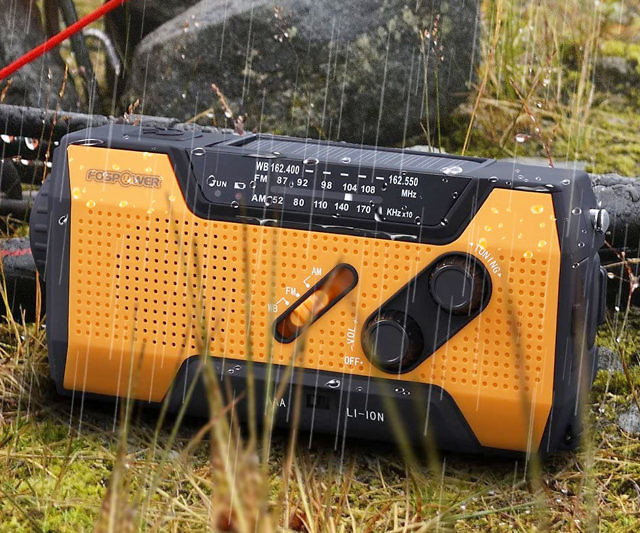
Emergency Solar Hand Crank Radio
This radio is positioned as a backup information device with a hand-crank power method. Check the current listing for supported radio bands, battery capacity, charging ports, antenna details, and whether any extra functions are included in the exact version.
3. Mega Flashlight Emergency Station
A larger emergency light station may be useful where a small pocket flashlight is not enough to illuminate a room or work area. The catalog description references a 120-watt halogen bulb and USB outlets. Check the device's size, battery type, runtime, charging method, bulb replacement needs, and whether the output is suitable for the space you intend to light. Keep spare batteries or another light source available.

Mega Flashlight Emergency Station
This is a larger emergency-light format rather than a compact pocket flashlight. The catalog description mentions a 120-watt halogen bulb and USB outlets. Buyers should verify the battery and charging setup, runtime, dimensions, replacement-bulb availability, and whether the unit is practical to store and carry.
4. Solar Powered Portable Power Bank
A power bank helps keep a phone or small device charged, but solar panels on compact banks are usually a slow backup rather than a fast way to refill a depleted battery. Check the rated capacity, charging inputs, output ports, solar-panel size, weather protection, and recharge time. Charge it from a wall outlet before an expected storm instead of waiting for sunlight during an outage.
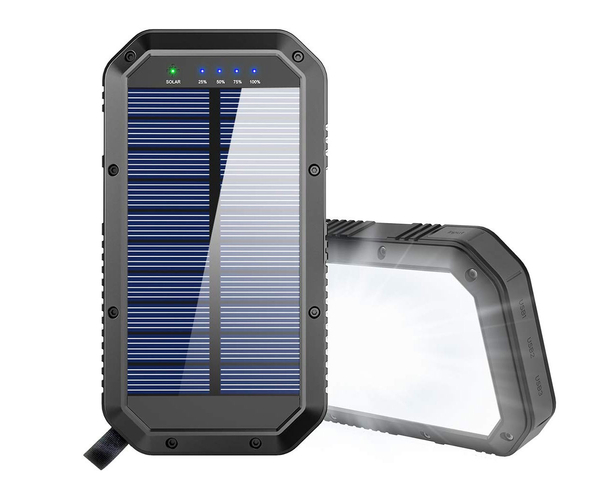
Solar Powered Portable Power Bank
This power bank is described as having a solar panel and a built-in light. Check its actual battery capacity, USB output, input charging speed, solar-panel size, and weather resistance. A small panel may provide only a slow top-up, so it should not be your only charging plan.
5. Two-Way Radio Walkie Talkies
Two-way radios can help household members or a small group communicate when mobile coverage is unreliable, but their usable range depends on terrain, buildings, antenna position, interference, and the radio's specifications. Check the supported channels, battery type, charging method, licensing rules that apply to the model, and whether all intended users can operate the controls.
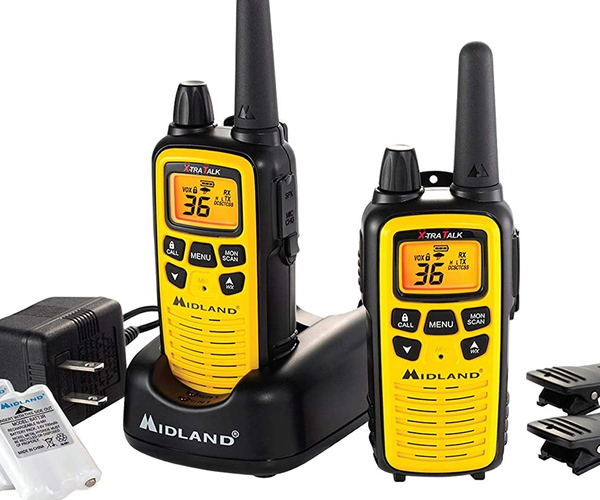
Two-Way Radio Walkie Talkies
A pair of two-way radios can provide local communication without relying on a mobile network. The catalog description does not establish a guaranteed real-world range, so compare the current channel, power, battery, charging, and regulatory details and test the devices in the area where you expect to use them.
6. LifeStraw Water Filter
A personal water filter can be useful in a preparedness kit, but its exact contaminant claims matter. Check the manufacturer's current specifications, filter life, storage instructions, flow rate, and what the device does not remove. Do not assume a personal filter removes viruses, fuel, salt, or dissolved chemicals. Follow local public-health advice and use an appropriate treatment method for the specific water risk.

LifeStraw Water Filter
This is a personal water-filter format rather than a large household water-storage system. Confirm the current manufacturer's contaminant-reduction claims, filter capacity, storage instructions, and limitations. A personal filter should not be treated as a universal solution for chemically contaminated or otherwise unsuitable water.
7. OneTigris Trauma Bag
A trauma bag is an organizer, not automatically a fully stocked medical kit. The catalog describes a nylon bag with modular webbing and storage sections. Check whether the listing is for the empty bag or includes supplies, then stock it with items appropriate to your household and training. Keep medicines in their original packaging and check expiration dates.
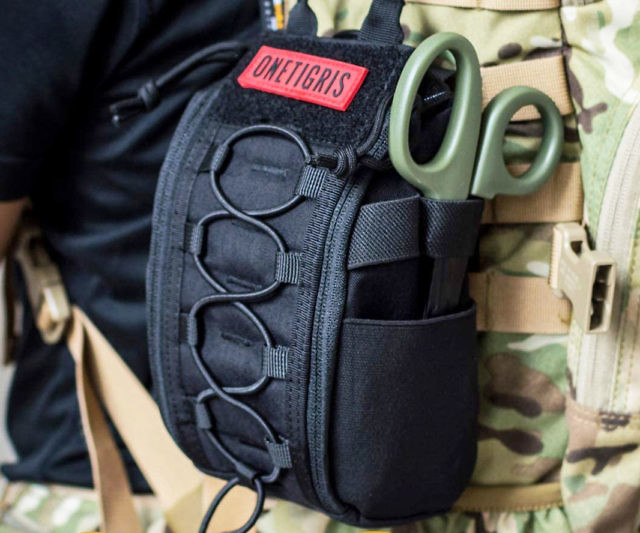
OneTigris Trauma Bag
This product is a first-aid and trauma-bag organizer described with modular webbing and a nylon construction. Do not assume the bag comes fully stocked. Confirm the included contents, dimensions, compartment layout, and attachment points, then add supplies suited to the people who may need them.
8. Life Tent Emergency Shelter
An emergency shelter is a backup for situations where someone may need temporary protection outdoors. The catalog describes a compact shelter format with a whistle. Check the actual dimensions, intended occupancy, material, setup instructions, packed size, and whether it is designed for the conditions you expect. It is not a replacement for a proper home, vehicle, or evacuation shelter.
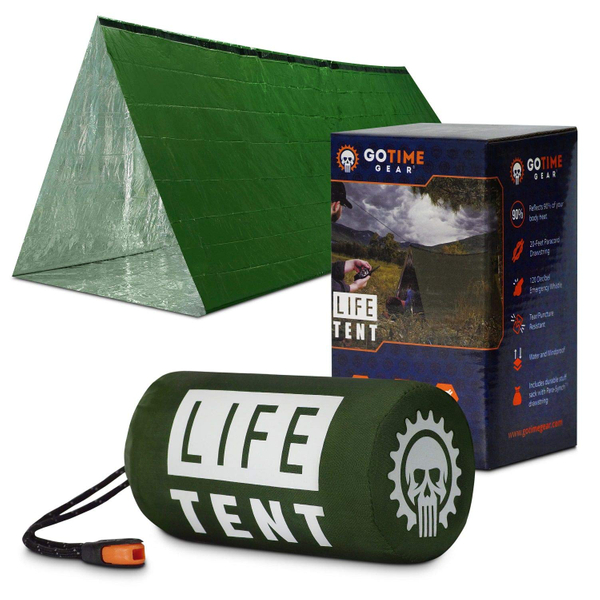
Life Tent Emergency Shelter
This is a compact emergency shelter product. The catalog description mentions a lightweight tent format and an included whistle, but buyers should confirm the current dimensions, occupancy, materials, setup method, and temperature limitations before relying on it.
9. The Life Saving 6-in-1 Car Tool
A vehicle escape tool is intended for a specific emergency, not general household use. The catalog description identifies a seat-belt cutter and window-breaking function. Check how the tool is stored, whether it can be reached while seated, and whether the manufacturer's instructions explain safe use. Keep it secured so it does not become a loose object in the cabin.
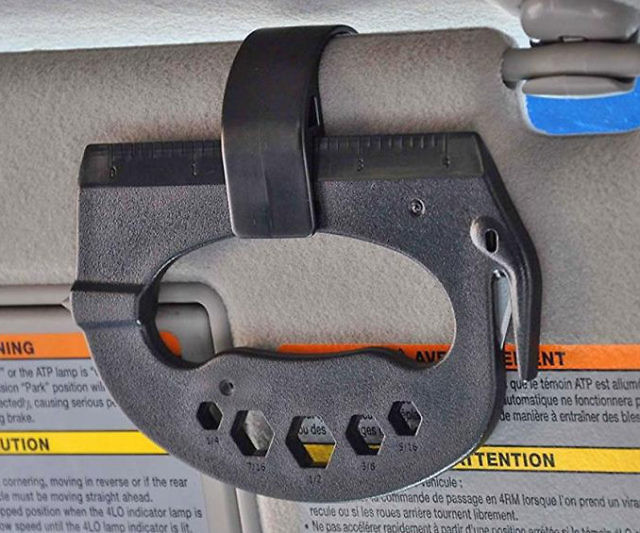
The Life Saving 6-in-1 Car Tool
This is a vehicle escape accessory described with a seat-belt cutter and window-breaking function. Verify the current tool layout, mounting or storage method, and use instructions. It is not a substitute for safe driving, vehicle maintenance, or emergency services.
10. The Survival Bandana
A printed survival bandana is best viewed as a compact reference accessory, not a primary navigation or medical tool. The catalog describes diagrams and tips for subjects such as signaling and shelter. Check that the print is legible, the material is suitable for ordinary bandana use, and the instructions match current outdoor-safety guidance.
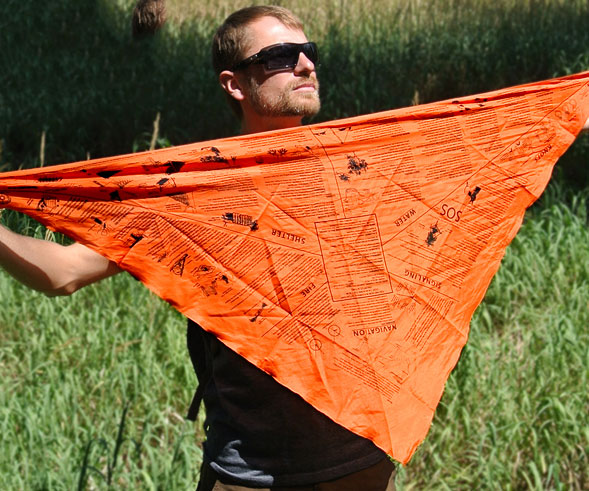
The Survival Bandana
This bandana is described as carrying printed survival tips and diagrams. Treat it as a reminder or reference item rather than a substitute for training, a map, or a dedicated first-aid guide. Check print readability and fabric details on the current listing.
How to assemble an emergency kit that is actually useful
Begin with the people in your household and the hazards in your area. Store drinking water, shelf-stable food, medications, copies of important documents, a flashlight, batteries, chargers, a first-aid kit, hygiene items, and warm clothing in a place everyone can reach. Add supplies for infants, older adults, people with disabilities, and pets. Keep a smaller version in the vehicle if you travel regularly.\n\nDo not rely on a single device for power, light, or communication. Keep phones charged before severe weather, maintain spare batteries where appropriate, and know how to receive official local alerts. Test radios and lights before storing them. Check expiration dates and replace used supplies.\n\nFor water, follow local emergency-management instructions. A personal filter may address some biological contaminants but not every chemical or viral risk. For first aid, stock only supplies you understand and consider taking an accredited first-aid course. Keep vehicle escape tools secured and learn their instructions before an emergency.
Frequently asked questions
How much water should a household store?\nFollow your local emergency-management guidance. A common planning baseline in the United States is at least one gallon per person per day for several days, with more needed in hot climates, for illness, pregnancy, or pets. Adjust for your household and local recommendations.\n\nIs a hand-crank radio better than a power bank?\nThey solve different problems. A radio can receive broadcasts, while a power bank supplies energy to small devices. Many households benefit from having both, plus a way to recharge them before an outage.\n\nCan a personal water filter make any water safe?\nNo. Filters have specific limits. Check the exact manufacturer's claims and do not assume a personal filter removes viruses, chemicals, fuel, or salt. Follow public-health guidance for the water source.\n\nDoes a trauma bag include medical supplies?\nNot always. Some listings are for an empty organizer. Confirm the contents before buying and stock it with supplies suited to your household and training.\n\nShould I keep emergency gear in one place?\nKeep the main household kit in an accessible location and consider a smaller vehicle kit. Make sure everyone knows where the supplies are and how to use the important items.
The Curator's Verdict
The most useful emergency kit is the one your household can find, understand, and maintain. Start with water, food, light, communication, medication, and first aid, then add products that address your local risks. Check contents, limitations, and expiration dates regularly; no single gadget replaces a household plan or official emergency guidance.